Opens in a new tab
Napa Valley · Appellation

Diamond Mountain District

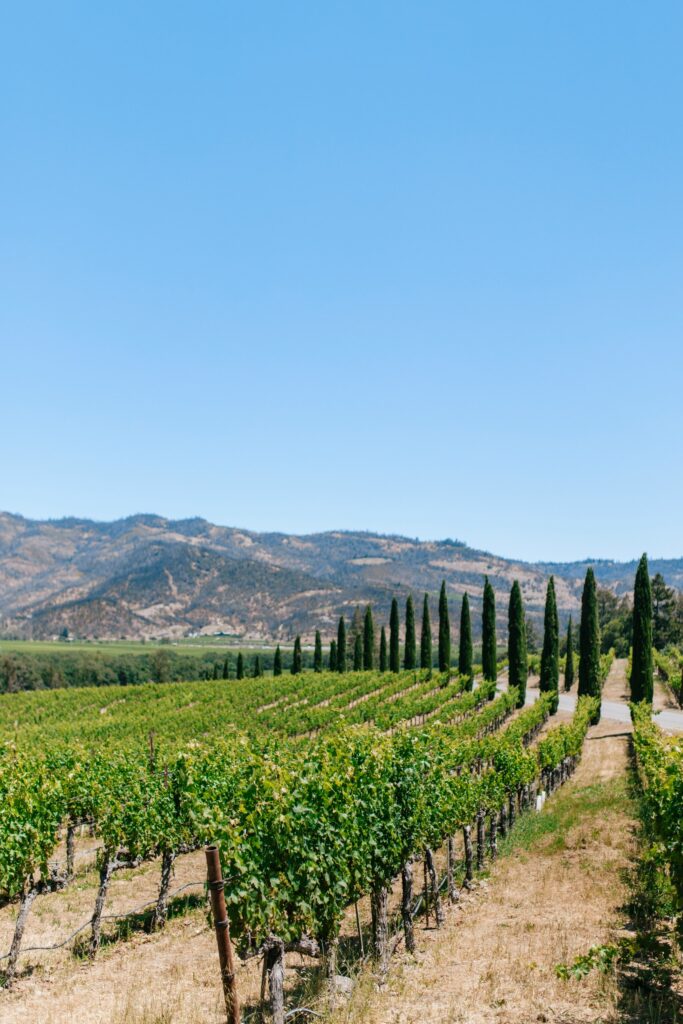
Vineyard rows and a line of cypress trees below dry mountains near Calistoga
Lisha Riabinina / Unsplash
A western Mayacamas mountain AVA producing some of Napa's most powerful and tannic Cabernet Sauvignon from white volcanic rhyolite soils, structured wines built for decades of cellaring.
Diamond Mountain District occupies the steep western slopes of the Mayacamas Range above Calistoga, where white volcanic rhyolite soils, iron-poor, shallow, and extremely well-drained, stress the vine in ways that produce small-berried, thick-skinned Cabernet Sauvignon of exceptional concentration and tannin. The district sits above the valley fog, receiving abundant sunshine and significant diurnal temperature variation. Wines from Diamond Mountain tend to be among the most powerful and longest-lived in all of Napa, with a minerality and austerity that distinguishes them from the more opulent valley-floor style. Sterling Vineyards and Diamond Creek (whose individual vineyard bottlings became legendary in the 1970s) are the appellation's most historically significant estates.
Western Mayacamas, above Calistoga. Access via Diamond Mountain Road. Above fog line, significant sunshine hours.

Part of Napa Valley

Appellation facts
Established
2001
Size
5,000 acres~600 acres planted
Elevation
400 to 2,200 ft
Climate
Mountain; warm afternoons; cool nights; above fog line
Soils
White volcanic rhyolite, iron-poor, thin, rocky soils
Signature grapes
  • Cabernet Sauvignon
Also: Merlot, Cabernet Franc, Zinfandel
Explore

Wineries in Diamond Mountain District

12 wineries

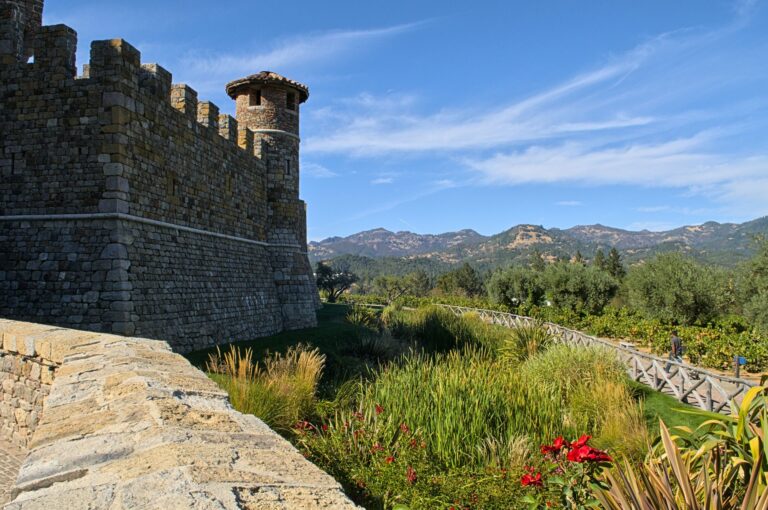
Castello di Amorosa castle walls above the Napa Valley with mountains beyond
Diamond Mountain District

Castello di Amorosa

Calistoga's 121-room replica castle pairs Instagram-famous architecture with legitimate Italian varietals and cave tours through real turret passages.

  • Cabernet Sauvignon
  • Italian Varietals