Sonoma County
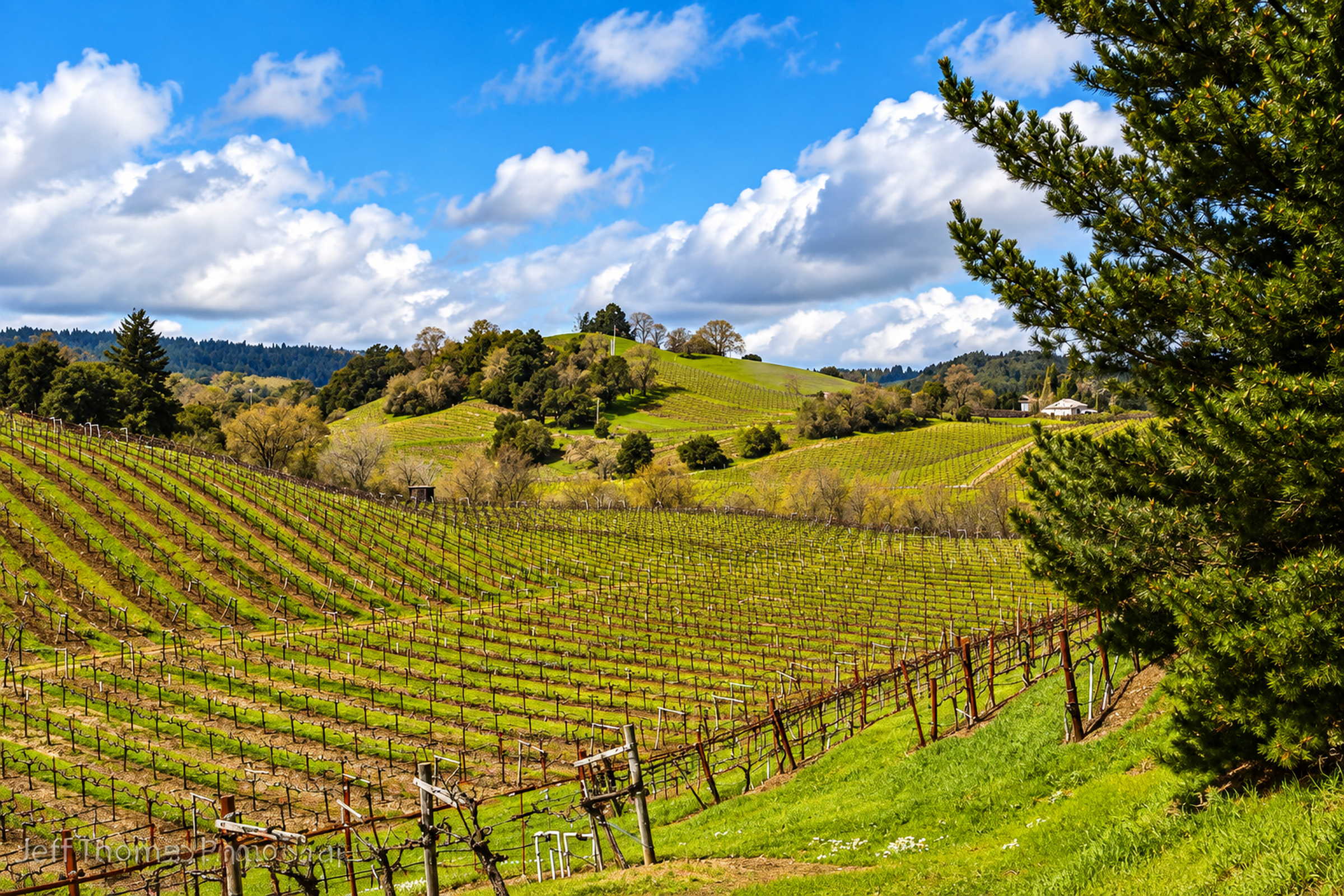
Sixteen appellations, coast to valley
Sonoma's appellations run from the fog-bound Sonoma Coast to the warm Alexander Valley floor. Click any one to see its wineries and what the site does to the wine. Los Carneros crosses into Napa County, so its boundary runs past the county line here. That is correct. It is one appellation shared by two counties.
Towns and basecamps
The first thing to understand about Sonoma is scale. It is a county, not a valley, and driving from the Sonoma Plaza to the Fort Ross-Seaview vineyards above the coast takes most of a morning. That size is why the wine is so varied: Alexander Valley ripens Cabernet, Dry Creek grows old-vine Zinfandel that predates most of the state's wine industry, and the Petaluma Gap funnels ocean wind inland hard enough to shape the grapes that grow in it.
Healdsburg is where most trips end up, and for good reason: three appellations meet within a short drive of its plaza, and the town has the restaurants and rooms to match. Sonoma town, forty minutes south, is older, quieter and built around a mission-era square that has not changed much.
The practical difference from Napa is access. More rooms take walk-ins, the fees are usually lower, and a Saturday afternoon is generally survivable. That is not a quality argument, it is a friction argument, and for a first wine trip it matters more than people expect.
When to go
Harvest is September into October. The coast stays cool and foggy through summer while Dry Creek and Alexander Valley run hot, so pack for both on the same day. Spring is the quiet bargain.
Sonoma is bigger than it looks on a map. A plan saves you the drive you did not budget for.